



All Products
Contact Person :
Devin
Phone Number :
+86-16663019390
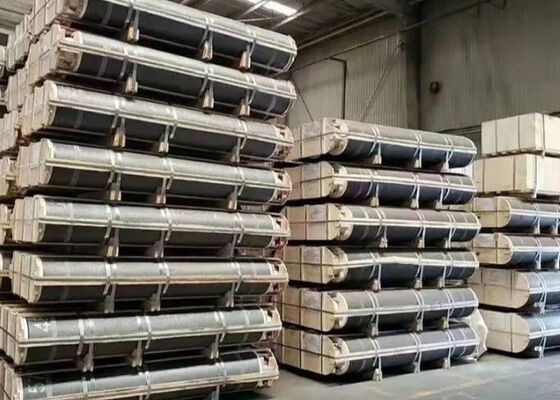
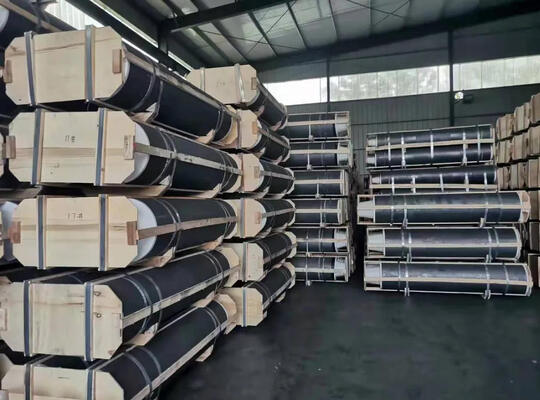
Cylinder Electrode 99.99% Carbon Graphite Rod 10mm High Quality uhp Price Graphite Electrode for Arc Furnaces


| Place of Origin | China |
|---|---|
| Brand Name | Chaoyo |
| Certification | QA/QC |
| Model Number | graphite electrode |
| Minimum Order Quantity | 25tons |
| Packaging Details | wooden pallet |
| Delivery Time | 10-15days |
| Payment Terms | TT/LC |
| Supply Ability | 3000 Metric Ton/Metric Tons per Month |
Product Details
| Application | EAF / LF | Diameter | 550mm |
|---|---|---|---|
| Length | 1800mm Length | Resistance (μΩ.m) | ≤6.5 |
| Apparent Density (g/cm³ ) | ≥1.65 | Thermal Expansion | ≤2.4 |
| Flexural Strength (N/㎡) | ≥10.5 | Type | Electrode Block |
| Grade | UHP (Ultra High Power) | Connect | 4TPI |
Product Description
Cylinder Electrode 99.99% Carbon Graphite Rod 10mm High Quality uhp Price Graphite Electrode for Arc Furnaces
Description:
Graphite electrode is a high-temperature graphite conductive material composed of petroleum coke and tar as fillers, and coal tar as binder. Graphite electrodes have the characteristics of low resistance, good conductivity and thermal conductivity, high oxidation resistance and thermal shock resistance, and high mechanical strength.Graphite electrodes can be divided into ordinary power graphite electrodes, high-power graphite electrodes, and ultra-high power graphite electrodes.
Electrode Nipple:Graphite electrodes and nipples have the advantages of high strength, not easy to break, and good current passing.
|
Nominal Diameter
|
Actual Diameter
|
Length (mm)
|
Tolerance
|
||||
|
MM
|
Inch
|
|
Mines
|
The Minimum Size Of The Black Part
|
Length
|
Short Length
|
|
|
75
|
3
|
78
|
73
|
72
|
1400/1600
|
± 100
|
-275
|
|
100
|
4
|
103
|
98
|
97
|
1400/1600
|
||
|
130
|
5
|
132
|
127
|
126
|
1400
|
||
|
150
|
6
|
154
|
149
|
146
|
1400/1600/1800
|
||
|
175
|
7
|
180
|
174
|
172
|
1400/1600
|
||
|
200
|
8
|
205
|
200
|
197
|
1600/1800
|
||
|
225
|
9
|
230
|
225
|
222
|
1600/1800
|
||
|
250
|
10
|
255
|
251
|
248
|
1600/1800
|
||
|
300
|
12
|
307
|
302
|
299
|
1600/1800/2000
|
||
|
350
|
14
|
357
|
352
|
349
|
1600/1800/2000
|
||
|
400
|
16
|
409
|
403
|
400
|
1600/1800/2000/22000
|
||
|
450
|
18
|
460
|
454
|
451
|
1600/1800/2000/22000
|
||
|
500
|
20
|
511
|
505
|
502
|
1600/1800/2000/22000
|
||
|
550
|
22
|
562
|
556
|
553
|
1800/2000/2200/2400
|
||
|
600
|
24
|
613
|
607
|
604
|
2000/2200/2400/2700
|
||
|
650
|
26
|
663
|
659
|
656
|
2000/2200/2400/2700
|
||
|
700
|
28
|
714
|
710
|
707
|
2000/2200/2400/2700
|
||
Applications of Graphite Electrode UHP
1.For arc furnaces of electric arc furnaces. Graphite electrodes are most often used in a coal-smelting electric furnace. 2.For a closed arc 3.For a resistor furnace 4.For the production of graphite shaped products. The graphite electrode blank is also used for processing in various crucibles,shapes, boats and heating elements and other graphite products. For example, in the quartz glass industry, for each production of 1 ton of an electric melting tube, a graphite electrode 10 m is required, for each quartz brick of 1 ton it is necessary to consume 100 kg of graphite electrode.
Characteristics Of Graphite electrodes:
1. Excellent Thermal Conductivity Graphite boasts exceptional thermal conductivity, far superior to most metals. It can efficiently transfer heat and maintain stable thermal performance even in extreme temperature environments (from ultra-low to high temperatures above 3000℃). This advantage makes it an ideal material for heat dissipation components, high-temperature furnaces, and thermal management systems in electronics, metallurgy, and aerospace industries.

Product Advantage
1.Anti-oxidation treatment for longevity.
2.High-purity,high-density,strong chemical stability.
3.High machining accuracy,good surface finishing.
4.High mechanical strength,low electrical resistance. 5.Resistant to cracking & spalling. 6.High resistance to oxidation and thermal shock.
Packaging:
1. Standard export carton/plywood crate
2. Customized shipping mark
3. QC Department Will Check In Case The Packing Method Isn't Safe Enough
1. Standard export carton/plywood crate
2. Customized shipping mark
3. QC Department Will Check In Case The Packing Method Isn't Safe Enough
Shipping:
1.By courier,like DHL,UPS,FEDEX,etc.It is door to door,usually,3-4 days to arrive.
2.By air to the air port,usually,5-7 days to arrive.
3.By sea to sea port,usually,15-30 days to arrive.
1.By courier,like DHL,UPS,FEDEX,etc.It is door to door,usually,3-4 days to arrive.
2.By air to the air port,usually,5-7 days to arrive.
3.By sea to sea port,usually,15-30 days to arrive.
Quality Assurance & Control
· National Certified Laboratory
· Key testing instruments, including: specific resistor, bulk density meter, elasticmodulus meter, bending strength inspector, ash analysis meter, CTE analysis meter, etc.
· On-time instrument calibration
· On-site properties testing, including:
L-CTE,C-CTE
Specific resistance, bulk density,
Bending strength, ash content, elastic modulus
Production Application:
- Core application in Electric Arc Furnace (EAF) steelmaking (accounting for over 70% of global consumption): Conduct electricity to generate high-temperature electric arcs for melting scrap steel, producing construction steel, automotive steel and specialty steel
- Facilitate non-ferrous metal smelting: Smelt metals such as copper, nickel and lead; also used in vacuum remelting of refractory metals like titanium to achieve purification and uniform composition
- Produce key industrial materials: Manufacture metallurgical-grade silicon, polysilicon (for solar energy/semiconductors), as well as phosphorus and ferroalloys in submerged arc furnaces
- Serve the electrochemical industry: Act as anodes in electrolytic refining of metals like copper and gold for purification, or as current collectors in fuel cells to ensure stable electricity transmission
- Support specialized industries: Assist in high-temperature production of glass/ceramics (reducing energy consumption); also used in laboratory high-temperature experiments and electrochemical analysis
Recommended Products