



All Products
Contact Person :
Devin
Phone Number :
+86-16663019390
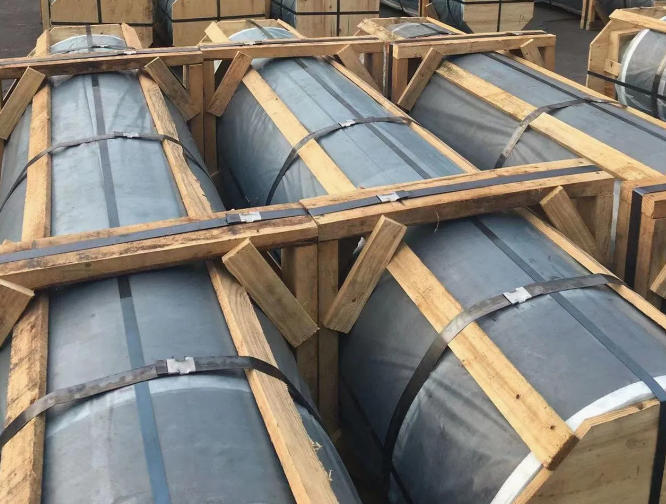
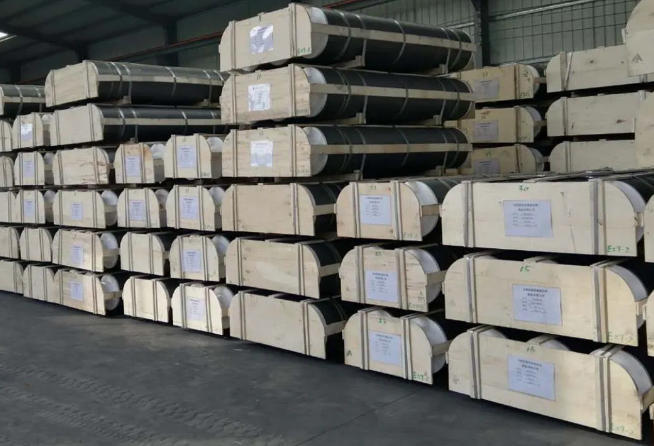
China RP HP UHP Graphite Electrode with Nipples for Eaf Lf
| Place of Origin | China |
|---|---|
| Brand Name | Chaoyo |
| Certification | QA/QC |
| Model Number | graphite electrode |
| Minimum Order Quantity | 25tons |
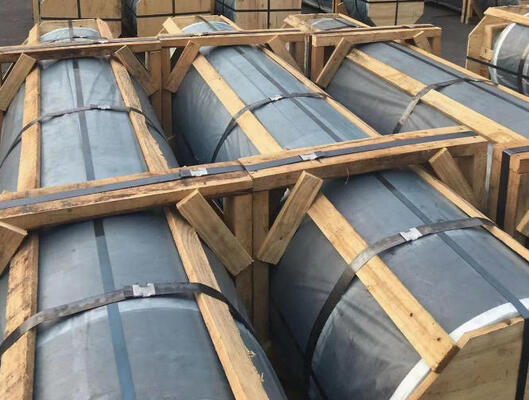
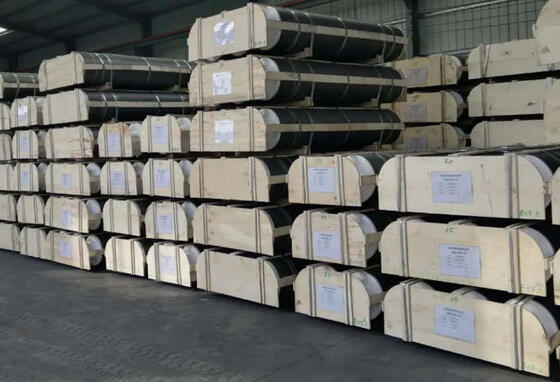
| Packaging Details | wooden pallet |
| Delivery Time | 10-15days |
| Payment Terms | TT/LC |
| Supply Ability | 3000 Metric Ton/Metric Tons per Month |
Product Details
| Application | EAF / LF | Diameter | 550mm |
|---|---|---|---|
| Length | 1800mm Length | Resistance (μΩ.m) | ≤6.5 |
| Apparent Density (g/cm³ ) | ≥1.65 | Thermal Expansion | ≤2.4 |
| Flexural Strength (N/㎡) | ≥10.5 | Type | Electrode Block |
| Grade | UHP (Ultra High Power) | Connect | 4TPI |
Product Description
China RP HP UHP Graphite Electrode with Nipples for Eaf Lf
Description:
Graphite Electrodes are a high-temperature resistant graphite conductive refractory material used in the metallurgical industry. Graphite Electrodes are made of petroleum coke, bituminous coke as aggregates, coal tar pitch as binders, after raw material calcination, crushing and milling, batching, kneading, moulding, roasting, impregnation, graphitization and machining, which are also known as artificial graphite electrodes in order to distinguish from natural graphite electrodes made of natural graphite.
Graphite Electrode is a conductor that releases electrical energy to heat and melt the charge in the form of an electric arc in an electric arc furnace.
Raw Material:Using coal pitch as binder, mainly made of petroleum coke and needle coke.
Process of graphite electrode: calcination, compounding, kneading, pressing, baking, impregnation, graphitization and machining
Specification
|
Item
|
Unit
|
Graphite Electrode
|
||||
|
RP
|
HP
|
UHP
|
||||
|
φ100—φ600
|
φ100—φ700
|
φ200—φ500
|
φ550—φ700
|
|||
|
Resistivity
|
Electrode
|
uΩm
|
7.0—10.0
|
5.8—6.6
|
4.8—5.8
|
4.6—5.8
|
|
Nipple
|
4.0—4.5
|
3.5—4.0
|
3.5—4.0
|
3.5—4.0
|
||
|
Modulus of Rupture
|
Electrode
|
Mpa
|
8.0—10.0
|
10.0—13.0
|
10.0—14.0
|
10.0—14.0
|
|
Nipple
|
19.0—22.0
|
20.0—23.0
|
20.0—24.0
|
22.0—26.0
|
||
|
Young's Modulus
|
Electrode
|
GPa
|
7.0—9.3
|
8.0—12.0
|
9.0—13.0
|
10.0—14.0
|
|
Nipple
|
12.0—14.0
|
14.0—16.0
|
15.0—18.0
|
16.0—19.0
|
||
|
Bulk Density
|
Electrode
|
g/cm3
|
1.53—1.56
|
1.64—1.68
|
1.68—1.74
|
1.68—1.74
|
|
Nipple
|
1.70—1.74
|
1.75—1.80
|
1.78—1.82
|
1.78—1.84
|
||
|
CTE
(100—600°C) |
Electrode
|
10—6/°C
|
2.2—2.6
|
1.6—1.9
|
1.1—1.4
|
1.1—1.4
|
|
Nipple
|
2.0—2.5
|
1.1—1.4
|
0.9—1.2
|
0.9—1.2
|
||
|
Ash
|
%
|
0.5
|
0.3
|
0.3
|
0.3
|
|

Advantages of Graphite Electrode
* Good oxidation resistance
* High mechanical strength.
* Needle coke content accounts for 80%
* Low electrical resistivity,good electrical conductivity
* Low ash content,Its ash content is controlled within 3%
* Dense and uniform structure,Low graphite electrode consumption
* Annual output of 80,000 tons, timely delivery
* High mechanical strength.
* Needle coke content accounts for 80%
* Low electrical resistivity,good electrical conductivity
* Low ash content,Its ash content is controlled within 3%
* Dense and uniform structure,Low graphite electrode consumption
* Annual output of 80,000 tons, timely delivery
Application
1. Electric arc steelmaking furnace.
1. Electric arc steelmaking furnace.
2. Ore-heating furnaces.
3. Resistance furnaces.
Service
*Our engineers team know all of the EAF, Ladle, and Foundry applications throughout Asia (Include middleast countries),America and Africa.
*Our engineer team will visit our customer's factory every year, to check and analyse the customers' furnace conditions in order to achieve an optimal performance of the graphite electrodes and a decrease of the specific electrode consumption.
*Other services including train employees,performance analysis, storage in our warehouses, inspection of accessories, and monitoring the furnace.
Quality Assurance & Control
· National Certified Laboratory
· Key testing instruments, including: specific resistor, bulk density meter, elasticmodulus meter, bending strength inspector, ash analysis meter, CTE analysis meter, etc.
· On-time instrument calibration
· On-site properties testing, including:
L-CTE,C-CTE
Specific resistance, bulk density,
Bending strength, ash content, elastic modulus
Production Application:
- Core application in Electric Arc Furnace (EAF) steelmaking (accounting for over 70% of global consumption): Conduct electricity to generate high-temperature electric arcs for melting scrap steel, producing construction steel, automotive steel and specialty steel
- Facilitate non-ferrous metal smelting: Smelt metals such as copper, nickel and lead; also used in vacuum remelting of refractory metals like titanium to achieve purification and uniform composition
- Produce key industrial materials: Manufacture metallurgical-grade silicon, polysilicon (for solar energy/semiconductors), as well as phosphorus and ferroalloys in submerged arc furnaces
- Serve the electrochemical industry: Act as anodes in electrolytic refining of metals like copper and gold for purification, or as current collectors in fuel cells to ensure stable electricity transmission
- Support specialized industries: Assist in high-temperature production of glass/ceramics (reducing energy consumption); also used in laboratory high-temperature experiments and electrochemical analysis
Recommended Products