



All Products
Contact Person :
Devin
Phone Number :
+86-16663019390
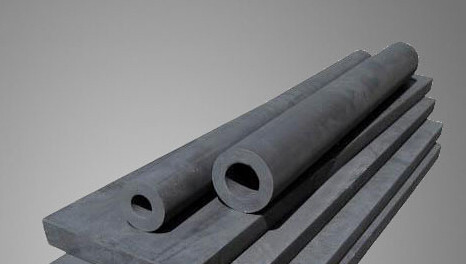
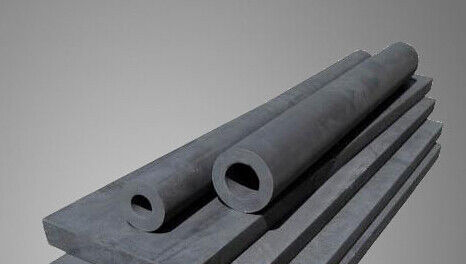
Isostatic Graphite Rods for Sale
| Place of Origin | China |
|---|---|
| Brand Name | Haisen |
| Certification | QA/QC |
| Model Number | graphite electrode |
| Minimum Order Quantity | 25 |
| Price | USD1000/MT |
| Packaging Details | wooden pallet |
| Delivery Time | 10-15days |
| Payment Terms | TT/LC |
| Supply Ability | 3000 Metric Ton/Metric Tons per Month |
Product Details
| Application | Isostatic Graphite Rods For Sale | Diameter | 57mm |
|---|---|---|---|
| Length | 260mm | Resistance (μΩ.m) | <=15 |
| Apparent Density (g/cm³ ) | 1.78 | Thermal Expansion | ≤4.5 |
| Flexural Strength (N/㎡) | ≥42.0 | Type | Electrode Block |
| Grade | RPI (Regular Power Impregnated) |
Product Description
Applications of graphite rod:
1. Apply to graphite anode, graphite mould , graphite pallet . used for chemical metallurgy, electronic industry and textile. etc
2. Machine to Electrodes, anodes, cathodes, heating elements, resistors, fluxing/degassing tubes, molds, crucibles, special structural parts, etc. in metallurgy, mechanical engineering, chemical & electrochemical industry, energy management, glass & ceramics, transportation and other industries.
3. Molds in continuous casting systems for making shaped steel, cast iron, copper;
Sintering molds for cemented carbides, diamond tools and electronic components;
4. Molds for making shaped glass; Crucibles for melting precious metals or alloys;
5. Electrodes for EDM; Heating elements, heat shields, crucibles, boats in furnaces for pulling monocrystalline silicon or optical fibers; Anodes for production of manganese dioxide, metallic magnesium and rare metals;
6. Graphite Blocks are molded or extruded or isotropic or vibrating graphite blocks. It is mainly used in the metallurgy or resistance furnaces such as carborundum or graphitization furnaces as the lining material, electric conduction material or impermeable graphite heating converters.

|
Type |
SG-4 |
SG-5 |
SG-6 |
|
Ash %≤ |
0.1 |
0.1 |
0.1 |
|
Resistance µm≤ |
10 |
9 |
8 |
|
Bulk densityg/cm≥ |
1.75 |
1.8 |
1.85 |
|
Compressive strength Mpa≥ |
45 |
60 |
70 |
|
Flexural strength Mpa≥ |
25 |
30 |
35 |
|
Porosity % |
1.8 |
0.15 |
0.12 |
|
Coefficient of thermal expansion |
4.0 |
4.5 |
5.5 |